Ensemble
Forensic AI-writing detection. Three detectors combined by a trained meta-learner, with sentence-level evidence instead of one opaque percentage.
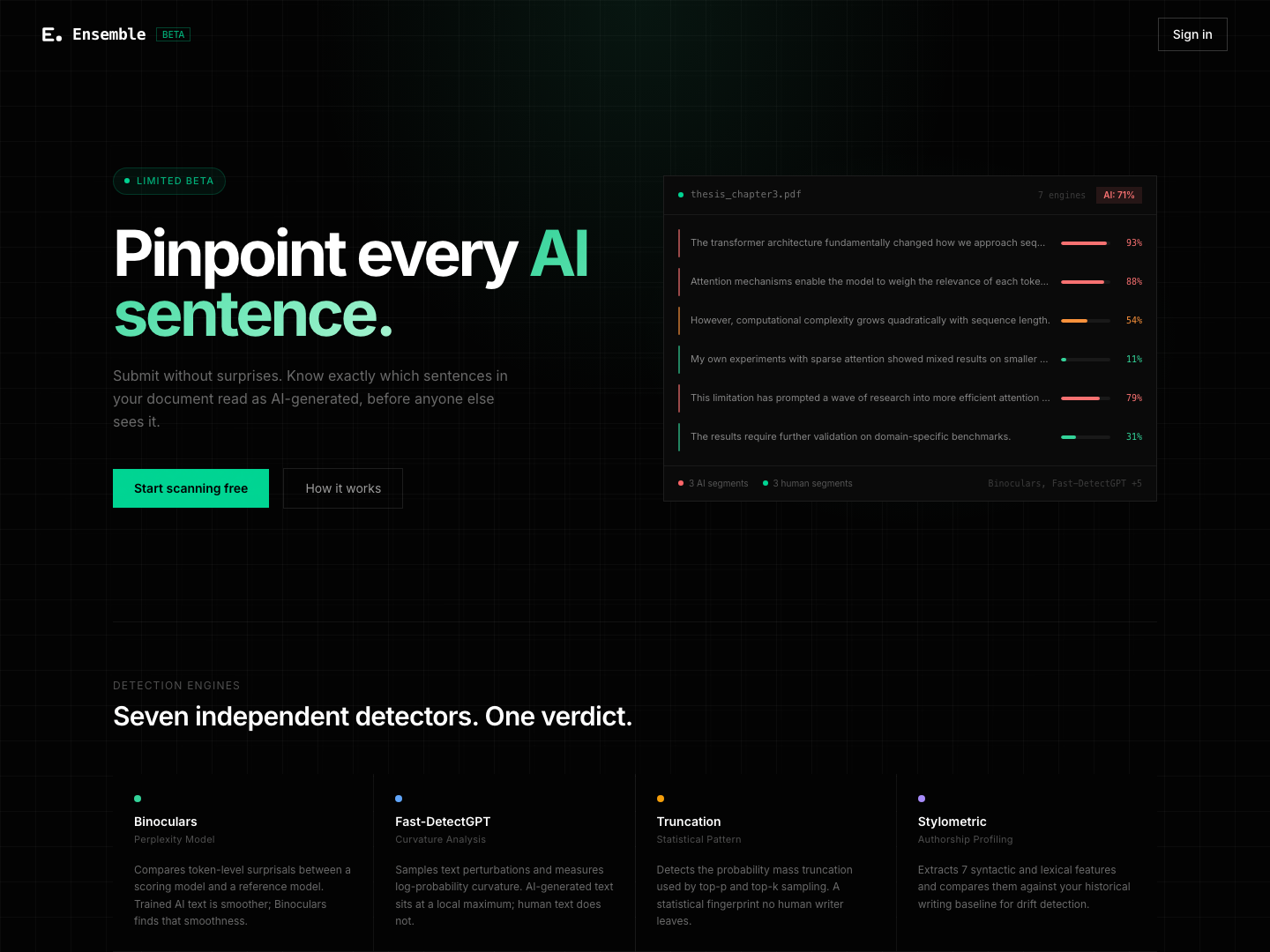
The Problem
Most AI checkers spit out '37% AI' with no defensible evidence. Ensemble runs three detectors (stylometric, modernbert, binoculars) combined by a trained meta-learner, then explains the verdict with token-level attribution and sentence evidence. Uncertain is a first-class output, not a failure.
Architecture
FastAPI on AWS Lambda for orchestration
Modal serverless GPU with scale-to-zero economics
DynamoDB + S3 split (control plane vs large payloads)
Bedrock Claude Haiku for explanations only, not decisions
Stripe credit wallet on an immutable append-only ledger
SST for stage-isolated deploys
Engineering Decisions
Why stack models?
Each method fails on different inputs. Combining them beats any one model in testing, especially on paraphrased text.
Why Modal over SageMaker?
SageMaker had cost-at-idle and capacity deadlock issues that killed deploy velocity. Modal scales to zero properly and warm-resumes fast. The migration was painful, the GPU bill dropped and deploys got simpler.
Why split verdict from explanation?
Scoring stays deterministic and stable. Explanation is additive, cacheable, optionally LLM-rendered after a verifier. So I can iterate on prose without destabilising verdicts.